 D. Y. Patil Education Society · Kolhapur
D. Y. Patil Medical College
Established in 1989, D. Y. Patil Medical College, Kolhapur, stands as a beacon of academic distinction and compassionate healthcare in Western Maharashtra. For over three decades, the institution has been dedicated to nurturing competent, ethical, and socially responsible medical professionals while delivering high-quality, affordable healthcare to the community.
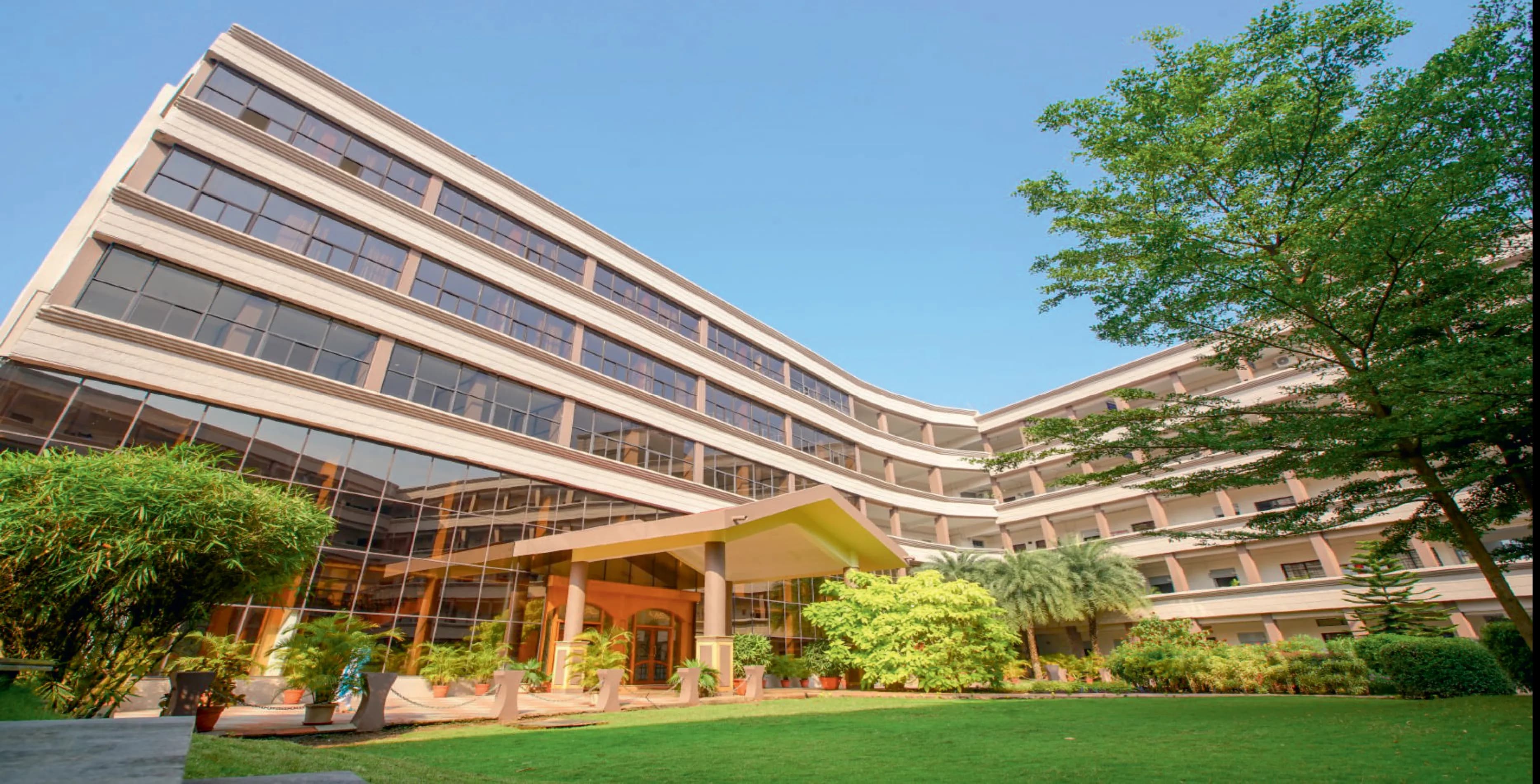
Medical education in Kolhapur since 1989, advancing academic and healthcare excellence
Vision
To become a world-class, dynamic institution of education, research and training that develops globally competitive professionals and a socially responsible human resource.
Mission
- Ensure globally relevant quality higher education and skill enhancement to provide trained manpower to the nation and the world.
- Promote symbiotic relations with industry, academic & research institutions and the community to meet stakeholder expectations.
- Engage in interdisciplinary research and innovation for the furtherance of knowledge, technology and growth.
- Adopt dynamic, technology-enabled approaches to curriculum development, andragogy, evaluation and system management.
- Provide an environment for the holistic evolution of learners as humane, socially responsible and ecologically conscious citizens.
Programmes offered
National Medical Commission–recognised programmes across the undergraduate, postgraduate and super-specialty levels.
- MBBS: a 4½-year undergraduate degree followed by a one-year compulsory rotating internship.
- MD / MS: postgraduate degrees across twelve clinical and para-clinical specialties.
- M.Sc. (Medical): Medical Anatomy, Medical Physiology, Microbiology and Medical Biochemistry.
- Ph.D.: doctoral research programmes as per University regulations.
| Programme | Level | Duration | Eligibility | Seats |
|---|---|---|---|---|
| MBBS | Undergraduate | 4½ years + 1-year internship | NEET-UG + 10+2 (PCB & English) | 200 |
| MD / MS | Postgraduate | 3 years | MBBS + NEET-PG | 77 |
| M.Sc. (Medical) | Postgraduate | Not specified | As per University norms | Not specified |
| Ph.D. | Doctoral | As per University regulations | As per University norms | Not specified |
Seats reflect the indicative sanctioned intake; refer to the official admission notification for the current year.
Who can apply
Admission to MBBS is through NEET-UG and centralised counselling. Candidates must meet the academic, entrance and age criteria below.
Eligibility criteria
- Passed 10+2 / HSC (or equivalent) from a recognised Board with Physics, Chemistry, Biology/Biotechnology and English.
- A minimum of 50% aggregate marks in Physics, Chemistry and Biology/Biotechnology taken together (English passed as a compulsory / core subject).
- Qualified NEET-UG with at least the 50th percentile (relaxations for reserved / PwD categories as per NMC norms).
- Completed 17 years of age on or before 31 December of the year of admission.
- Medically fit as per the prescribed standards.
Documents required
- NEET-UG scorecard / admit card and rank letter.
- SSC (10th) and HSC (12th) mark sheets and passing certificates.
- Transfer (Leaving) certificate and Migration certificate.
- Domicile certificate and a valid photo ID (Aadhaar).
- Caste / category, Caste Validity and Non-Creamy-Layer certificates (where applicable).
- Medical fitness certificate and recent passport-size photographs.
MBBS structure & phases
Every student undergoes 4½ academic years from the date of commencement, followed by one year of compulsory rotating internship, delivered through four phases.
- MBBS spans 4½ academic years from the date of commencement, followed by one year of compulsory rotating internship.
- Delivered under the National Medical Commission's Competency-Based Medical Education (CBME) curriculum.
- Teaching integrates lectures, small-group and self-directed learning, skills / simulation, AETCOM modules and early clinical exposure.
- Clinical training is delivered at the attached multi-specialty teaching hospital from the para-clinical phase onwards.
Phase I · First MBBS
Lecture halls, dissection hall & laboratories
- Foundation Course
- Human Anatomy
- Human Physiology
- Biochemistry
- Introduction to Community Medicine
- Early Clinical Exposure (ECE)
- Family Adoption Programme (FAP)
- AETCOM (Attitude, Ethics & Communication)
- Sport and Extra Curricular Activities
- Smart Lecture Halls
- Dissection Hall
- Anatomy Museum
- Physiology & Biochemistry Laboratories
- Simulation & Skill Centre
Attendance & eligibility
- 75% attendance in theory and 80% in practicals is required to appear for the university examination.
- 75% attendance is mandatory in the AETCOM modules (Biochemistry module compulsory) and in Early Clinical Exposure (at least 70 of 90 hours).
- Required certifiable competencies and the phase log book must be completed to be eligible for the final examination.
Internal assessment & examination
- Three internal assessments are held at department level (December, March and the July Prelim) plus one summative university examination at the end of the phase.
- For internal assessment a student must secure 50% combined in theory and practical, with not less than 40% in each.
- At the university examination, 50% marks are required separately in theory and in practical (practical = practical/clinical + viva) to pass a subject.
- Internal assessment is converted to 40 marks and reflects as a separate head of passing.
Marks distribution
Theory and practical / oral marks for the university examinations across the four professional phases.
| Subject | Papers | Theory | Practical / Oral |
|---|---|---|---|
| First Professional | |||
| Human Anatomy | 2 papers | 200 | 100 |
| Physiology | 2 papers | 200 | 100 |
| Biochemistry | 2 papers | 200 | 100 |
| Second Professional | |||
| Pharmacology | 2 papers | 200 | 100 |
| Pathology | 2 papers | 200 | 100 |
| Microbiology | 2 papers | 200 | 100 |
| Third Professional · Part I | |||
| Forensic Medicine & Toxicology | 1 paper | 100 | 100 |
| Ophthalmology | 1 paper | 100 | 100 |
| Otorhinolaryngology (ENT) | 1 paper | 100 | 100 |
| Community Medicine | 2 papers | 200 | 100 |
| Third Professional · Part II | |||
| General Medicine | 2 papers | 200 | 200 |
| General Surgery | 2 papers | 200 | 200 |
| Paediatrics | 1 paper | 100 | 100 |
| Obstetrics & Gynaecology | 2 papers | 200 | 200 |
Pass criteria: 50% combined in internal assessment (not less than 40% each in theory & practical) and 50% separately in the university theory and practical examinations.
AETCOM & the subject syllabus
Beyond the phase structure above, the CBME curriculum runs a longitudinal AETCOM (Attitude, Ethics & Communication) thread and a detailed subject syllabus across the programme.
AETCOM: Attitude, Ethics & Communication
A longitudinal module that builds the professional and humanistic competencies of the Indian Medical Graduate. The Phase I modules:
Subject syllabus
The scope of each subject across the MBBS programme: open a subject to read more.
Programme & course outcomes
At the end of the programme the Indian Medical Graduate attains nine Programme Outcomes (POs). Each subject declares Course Outcomes (COs) mapped to these POs; the articulation matrix shows how strongly each core subject contributes to every PO.
Course–PO articulation matrix
How strongly each core subject contributes to every Programme Outcome (3 high · 2 medium · 1 low).
| Subject | PO1 | PO2 | PO3 | PO4 | PO5 | PO6 | PO7 | PO8 | PO9 |
|---|---|---|---|---|---|---|---|---|---|
| Anatomy | 3 | 2 | 2 | 2 | 1 | 2 | 1 | 1 | 1 |
| Physiology | 3 | 3 | 2 | 2 | 1 | 2 | 2 | 1 | 1 |
| Biochemistry | 3 | 2 | 2 | 1 | 1 | 2 | 2 | 1 | 2 |
| Pathology | 3 | 3 | 3 | 2 | 2 | 2 | 2 | 2 | 1 |
| Pharmacology | 3 | 3 | 3 | 2 | 2 | 2 | 2 | 2 | 2 |
| Microbiology | 3 | 2 | 2 | 2 | 2 | 2 | 2 | 2 | 2 |
| Forensic Medicine | 2 | 2 | 3 | 2 | 2 | 2 | 1 | 3 | 1 |
| Community Medicine | 3 | 3 | 3 | 3 | 3 | 2 | 2 | 3 | 3 |
| General Medicine | 3 | 3 | 3 | 3 | 3 | 3 | 2 | 3 | 2 |
| General Surgery | 3 | 3 | 3 | 3 | 3 | 2 | 2 | 2 | 2 |
The Indian Medical Graduate
On completing MBBS and internship, graduates are eligible for registration as a medical practitioner and embody the roles below, with clear pathways into NEET-PG, MD/MS and super-specialty training.
Sanctioned annual intake
Indicative sanctioned seats across undergraduate, postgraduate and M.Sc. programmes. Seats are filled per the reservation policy and admission norms of the relevant authorities.
Postgraduate (MD/MS) intake
Specialty-wise sanctioned intake for the postgraduate medical programmes.
| Specialty | Degree | Seats |
|---|---|---|
| General Medicine | MD | 13 |
| Paediatrics | MD | 9 |
| Radiodiagnosis | MD | 7 |
| Pathology | MD | 6 |
| Anaesthesiology | MD | 6 |
| Psychiatry | MD | 3 |
| Dermatology, Venereology & Leprosy | MD | 1 |
| General Surgery | MS | 10 |
| Orthopaedics | MS | 9 |
| Obstetrics & Gynaecology | MS | 6 |
| Ophthalmology | MS | 5 |
| Otorhinolaryngology (ENT) | MS | 2 |
M.Sc. (Medical) Programmes: Medical Anatomy, Medical Physiology, Microbiology, Medical Biochemistry.
Departments & faculty
Teaching is delivered by qualified faculty across the pre-clinical, para-clinical and clinical departments, maintaining the NMC-prescribed teacher–student ratio.
Pre-Clinical
- Anatomy
- Physiology
- Biochemistry
Para-Clinical
- Pathology
- Pharmacology
- Microbiology
- Forensic Medicine & Toxicology
- Community Medicine
Clinical
- General Medicine
- General Surgery
- Paediatrics
- Obstetrics & Gynaecology
- Orthopaedics
- Ophthalmology
- Otorhinolaryngology (ENT)
- Dermatology, Venereology & Leprosy
- Psychiatry
- Anaesthesiology
- Radiodiagnosis
- Dentistry
Pre-Clinical & Para-Clinical Departments
| Department | Professor & Head (HOD) | Qualification |
|---|---|---|
| Anatomy | Dr. Mrs. Gune Anita Rahul | M.S. (Anatomy) |
| Physiology | Dr. Mrs. Tiwale Sunita M. | M.D. (Physiology) |
| Biochemistry | Dr. (Mrs.) Patil Vaishali Santosh | M.Sc. (Medical), Ph.D. (Medical Biochemistry) |
| Pathology | Dr. Deshmukh Suchita | M.D. (Pathology) |
| Pharmacology | Dr. Dhavalshankh Archana | M.D. (Pharmacology) |
| Microbiology | Dr. Chougule Roma A. | M.D. (Microbiology) |
| Forensic Medicine & Toxicology | Dr. Rathod Pratapsingh | M.D. (Forensic Medicine) |
| Community Medicine | Dr. Yadav Jeevan Kumar | M.D. (Preventive & Social Medicine) |
Clinical Departments
| Department | Professor & Head (HOD) | Qualification |
|---|---|---|
| General Medicine | Dr. Jotkar Sushma K. | M.D. (Medicine) |
| Psychiatry | Dr. Harshe Devavrat Gurudas | M.D. (Psychiatry) |
| Skin & V.D. (Dermatology, Venereology & Leprosy) | Dr. Phulari Yoganand Jagannath | M.D. (Dermatology, Venereology & Leprosy) |
| Radiodiagnosis | Dr. Pradip Patil | M.D. (Radiodiagnosis) |
| Obstetrics & Gynaecology | Dr. Shah Neelima | M.S. (Obstetrics & Gynaecology) |
| Dentistry | Dr. Anand Amirthraj Annamalai | B.D.S., M.D.S. |
| Otorhinolaryngology (ENT) | Dr. Patil Balasaheb C. | M.S. (Oto-Rhino-Laryngology) |
| Anaesthesiology | Dr. Kasam Sandeep Kadam | M.D. (Anaesthesiology) |
| Ophthalmology | Dr. Sabnis Milind | M.S. (Ophthalmology) |
| Orthopaedics | Dr. Patil Pradeep | M.S. (Orthopaedics) |
| General Surgery | Dr. Mrs Khyalappa Rekha | M.S. (General Surgery) |
| Paediatrics | Dr. Patil Nivedita B. | M.D. (Paediatrics) |
Hospital, labs & facilities
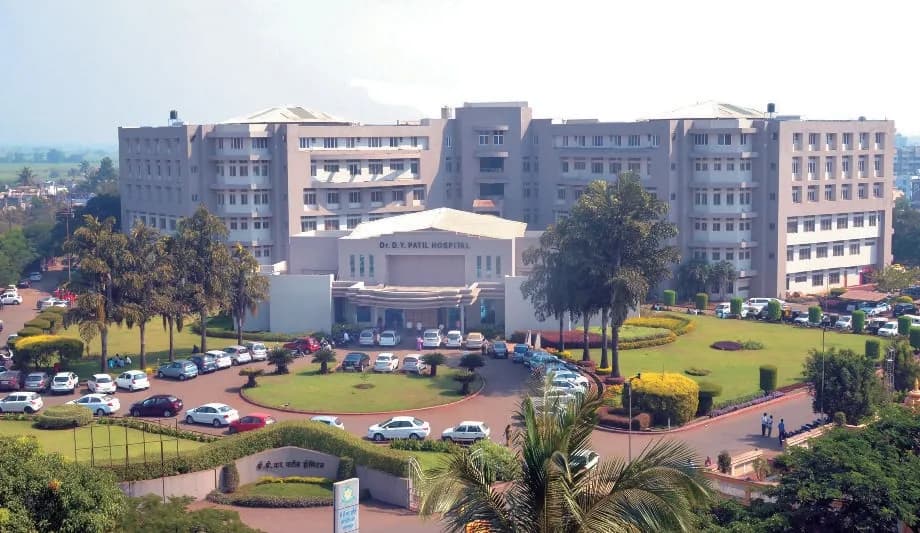
Clinical training is anchored by Dr. D. Y. Patil Medical College Hospital & Research Institute, Kadamwadi: a NABH-accredited, ISO 9001:2015 multi-specialty teaching hospital with NABL-accredited laboratories.
Clinical services
24+ specialties under one roof
- General Medicine, Surgery, Paediatrics and Obstetrics & Gynaecology
- Cardiology, Nephrology, Neurosurgery and Endocrinology
- Surgical & Medical Gastroenterology, Urology and Vascular Surgery
- Surgical Oncology, Plastic & Reconstructive Surgery and Paediatric Surgery
- Critical care, casualty / emergency and modular operation theatres
Diagnostics & laboratories
Imaging, labs & support services
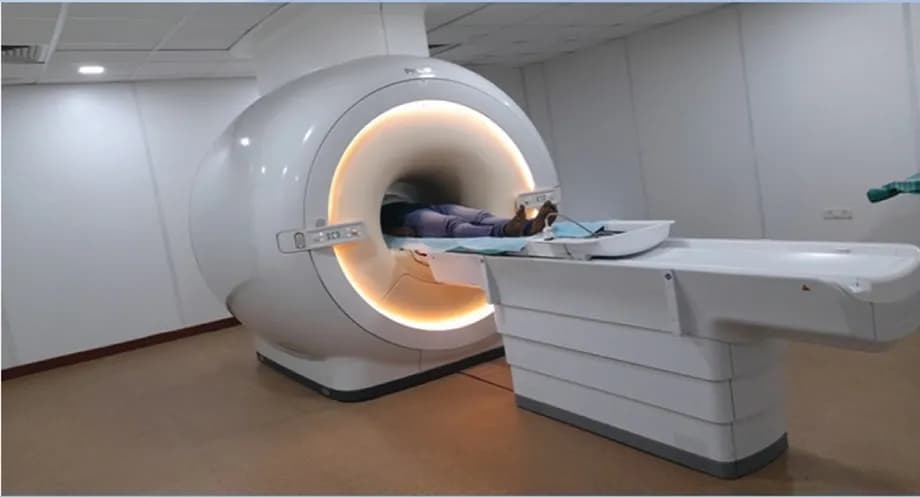
- Imaging: CT, MRI, mammography, ultrasound, 2D-echo, EEG, EMG and TMT
- NABL-accredited labs: biochemistry, microbiology & serology, pathology
- Cytopathology, haematology and histopathology
- 24×7 blood bank and transfusion services
- Pharmacy, ambulance, dietetics and physiotherapy
Academic & campus facilities
Library, research & residential life
- Pre-clinical and para-clinical laboratories, departmental museums and a clinical skills & simulation facility.
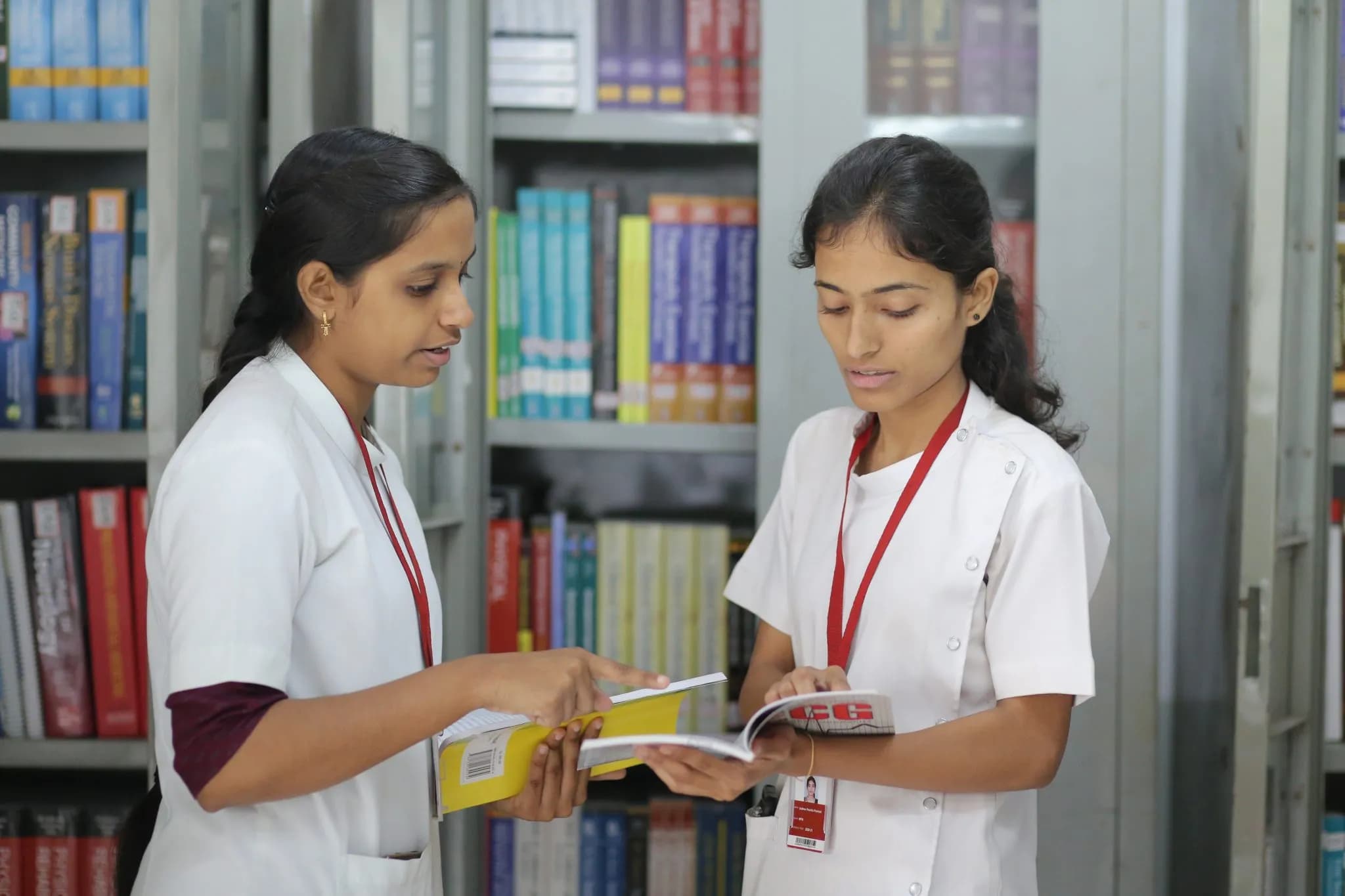
- Central library with print and e-resources, lecture theatres and seminar rooms.
- Centre for Interdisciplinary Research: nanotechnology, medical biophysics and regenerative medicine.
- Separate hostels, transport and sports facilities on a residential campus.
Admissions are open.Your medical career starts here.
Apply through NEET-UG counselling for the current MBBS intake, or download the brochure to explore the programmes, eligibility and curriculum in detail.